Wondering what everyday life in Greenpoint actually feels like once you get past the headlines and restaurant buzz? If you are considering a move, planning a home search, or simply trying to understand the neighborhood better, it helps to look at how people really use Greenpoint day to day. From waterfront parks and coffee routines to transit options and housing types, here is a practical guide to what living in Greenpoint looks like. Let’s dive in.
Greenpoint has a distinct daily rhythm
Greenpoint feels layered in a way that is hard to capture with a single label. Older industrial sites, long-standing Polish businesses, and newer residential development all sit close together, which gives the neighborhood a mix of old and new that you notice quickly.
A lot of daily life centers on a few reliable corridors rather than one nonstop commercial core. Manhattan Avenue remains one of the clearest anchors, with Polish delis, bakeries, and butcher shops still part of the streetscape, alongside newer cafes and restaurants.
That mix helps Greenpoint feel neighborhood-scaled. You can build routines around familiar blocks, local parks, and regular errands without feeling like everything is organized around nightlife or constant activity.
Manhattan Avenue shapes daily errands
If you live in Greenpoint, Manhattan Avenue is likely to become part of your weekly routine. It is one of the neighborhood’s most established commercial corridors, and it reflects both Greenpoint’s Polish-American history and its broader dining scene today.
You will still find legacy food businesses that have defined the area for years. At the same time, newer spots have added more variety, so your options can range from traditional bakeries to tacos, udon, and destination restaurants.
That balance is part of what makes Greenpoint stand out. The neighborhood has become a culinary destination in its own right, even as nearby Williamsburg often gets more attention.
Food options feel broad but local
Greenpoint’s dining scene is not one-note. Longtime favorites like Peter Pan Donut & Pastry Shop and Karczma sit alongside newer names such as Wenwen, Lingo, Oxomoco, Diandi, Taqueria Ramirez, and Bernie's.
For everyday routines, the neighborhood also supports a strong casual layer. Places like Pueblo Querido Coffee Roasters and Soft Bar help round out the week with coffee, baked goods, and all-day drink options that fit a slower neighborhood pace.
What that means for you is simple: you can keep your daily habits close to home. Whether you want a quick coffee, a familiar bakery, or a dinner reservation worth planning around, Greenpoint offers variety without losing its local feel.
Parks are part of everyday life
One of Greenpoint’s biggest strengths is how easy it is to build outdoor time into your routine. The neighborhood’s waterfront and inland parks create several different ways to spend time outside, depending on where you live and what kind of space you use most.
WNYC Transmitter Park is one of the most recognizable waterfront spots in the neighborhood. According to NYC Parks, it includes a large lawn, play areas, spray showers, sand-and-water stations, nature gardens, and colorful play structures.
The Newtown Creek Nature Walk adds another kind of outdoor access. It offers a nearly half-mile self-guided waterfront promenade, which gives the area a quieter, more reflective edge than you might expect in a dense part of Brooklyn.
McGolrick and McCarren support routine use
Away from the waterfront, Greenpoint also has two major neighborhood parks that shape everyday life. McGolrick Park covers 9.13 acres, while McCarren Park spans 35 acres, according to NYC Parks.
McCarren supports a wide range of regular activity, including kickball, soccer, baseball, bocce, basketball, tennis, running meets, and playground use. McGolrick offers a more classic neighborhood park experience and often serves as a steady local backdrop for walks, meetups, and downtime.
For buyers thinking about long-term livability, this matters. Greenpoint is not just a place with a few green spaces on a map. It is a neighborhood where parks are woven into real daily routines.
Waterfront growth is adding open space
New development on the waterfront is also expanding the neighborhood’s outdoor footprint. The city has said Greenpoint Landing will eventually include about 5,500 apartments and five acres of public open space.
That adds another layer to daily life, especially for residents drawn to newer buildings and waterfront access. It also reinforces how much Greenpoint’s recent growth is tied to an outdoor-first lifestyle.
Transit works, but the G train leads
Transit in Greenpoint is useful and flexible, but it helps to understand the neighborhood on its own terms. The G train is the backbone, with Greenpoint Avenue and Nassau Avenue stations serving the area.
The MTA also notes that Greenpoint Avenue became ADA accessible after its elevator project was completed in 2020. For many residents, that improvement makes daily commuting more workable and more predictable.
Greenpoint is not defined by a huge transit hub. Instead, it offers a practical network built around the G train, buses, and ferry connections.
Buses and ferry fill in the map
Bus service adds important local links. The B24 serves Greenpoint Avenue and Manhattan Avenue, the B43 runs along Manhattan Avenue and connects through Brooklyn, and the B48 connects Greenpoint through Lorimer Street.
NYC Ferry’s East River route also stops at Greenpoint. From there, riders can connect to Wall Street/Pier 11, DUMBO/Fulton Ferry, East 34th Street, South Williamsburg, North Williamsburg, and Hunters Point South.
For you as a buyer, this means Greenpoint can work well even if your routine is not subway-only. Depending on where you need to go, ferry and bus access can play a meaningful role in your day-to-day schedule.
Housing stock is more varied than many expect
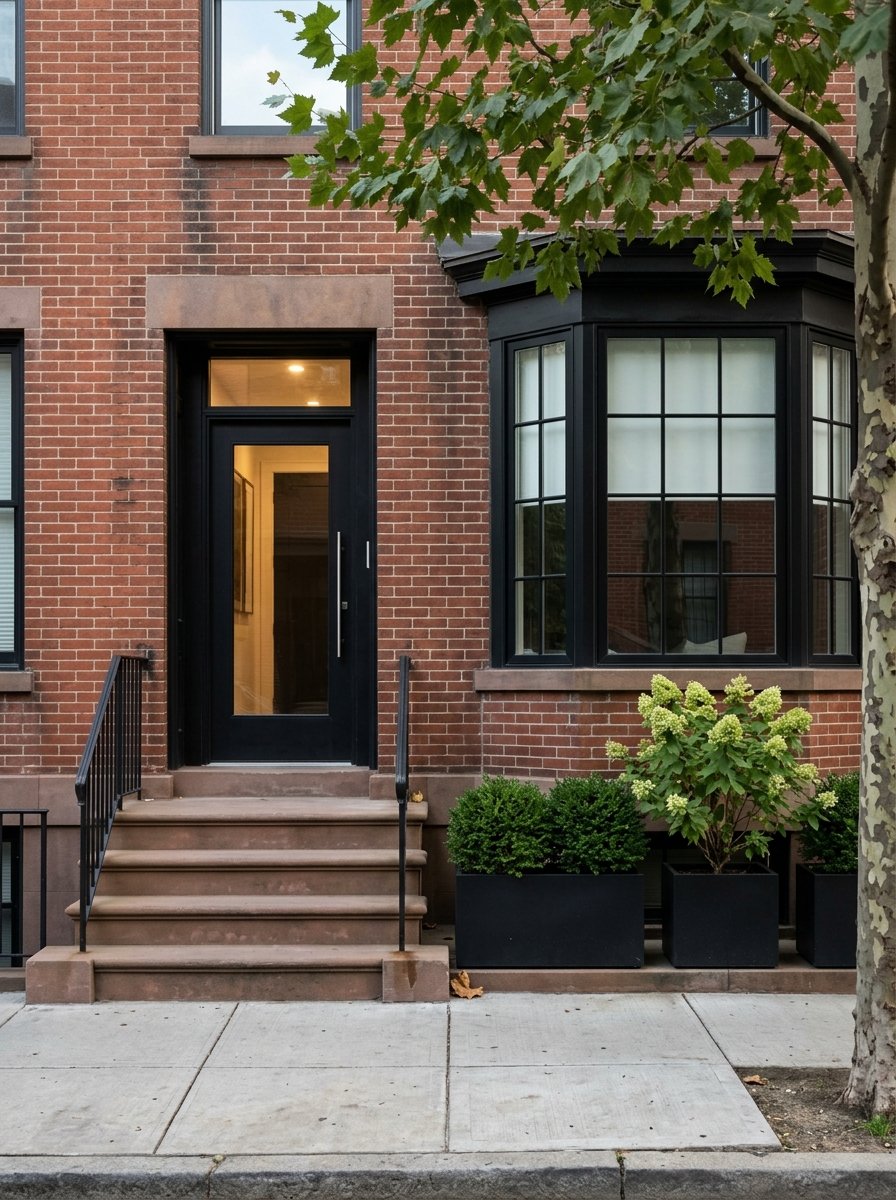
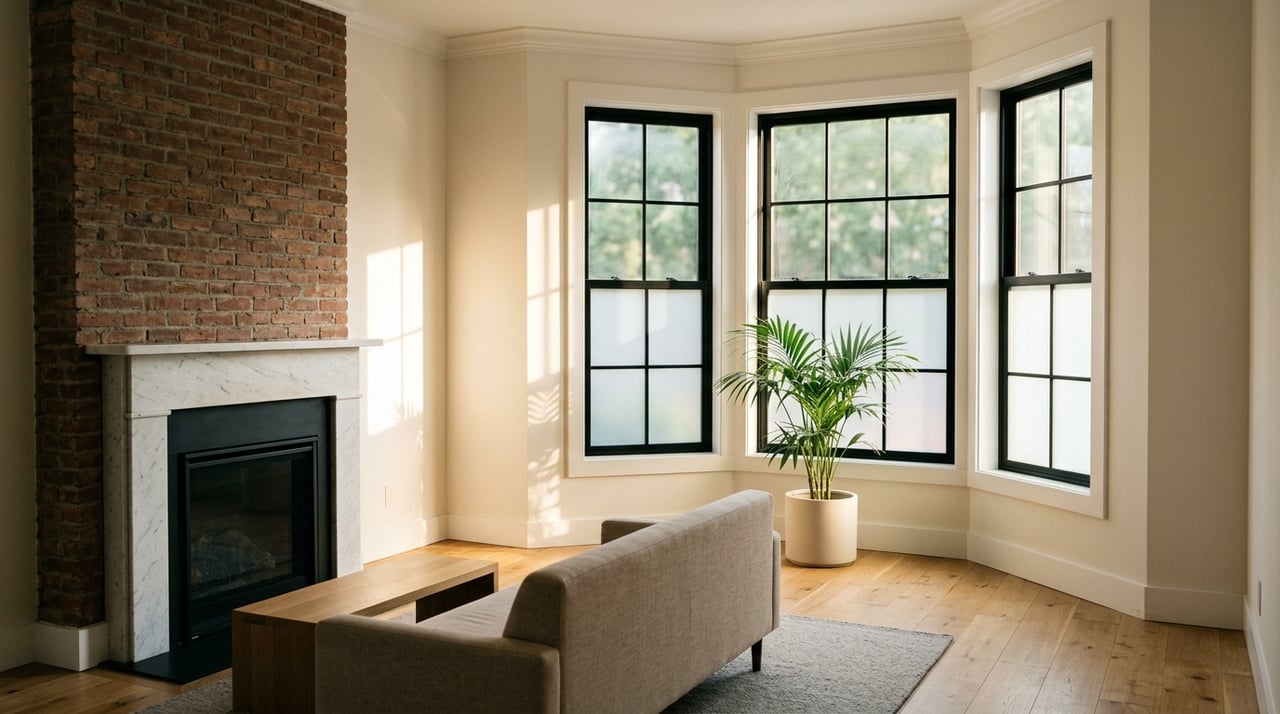
One of the most important things to know about Greenpoint is that its housing stock is not uniform. The neighborhood includes historic rowhouses, low-rise walkups, converted loft-style buildings, and newer condo and rental properties.
The Greenpoint Historic District includes 19th-century Italianate rowhouses, according to the Landmarks Preservation Commission. At the same time, city planning materials tied to the Greenpoint-Williamsburg rezoning describe a framework that supported legalized converted loft buildings and new housing while protecting industrial areas.
That range creates very different living experiences from block to block. If you are home shopping here, the product mix is one of the biggest reasons it pays to understand the micro-location, building type, and street context.
Waterfront homes feel newer and more amenitized
The newest housing layer is most visible along the waterfront. Greenpoint Landing, a 22-acre site, will eventually include about 5,500 apartments, and recent openings added 374 permanently affordable homes.
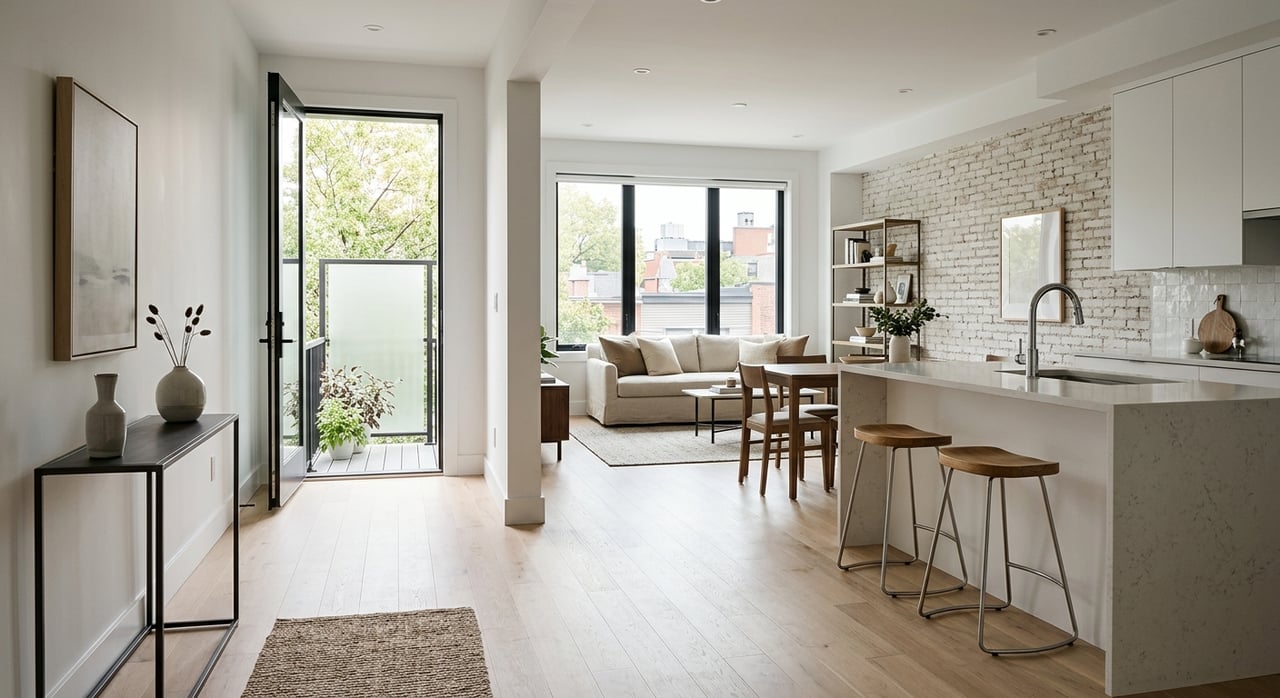
This part of the neighborhood tends to read differently from the older inland blocks. In broad terms, the waterfront stock is more tower-oriented and amenity-driven, while interior sections of Greenpoint often feel lower-rise and more historically textured.
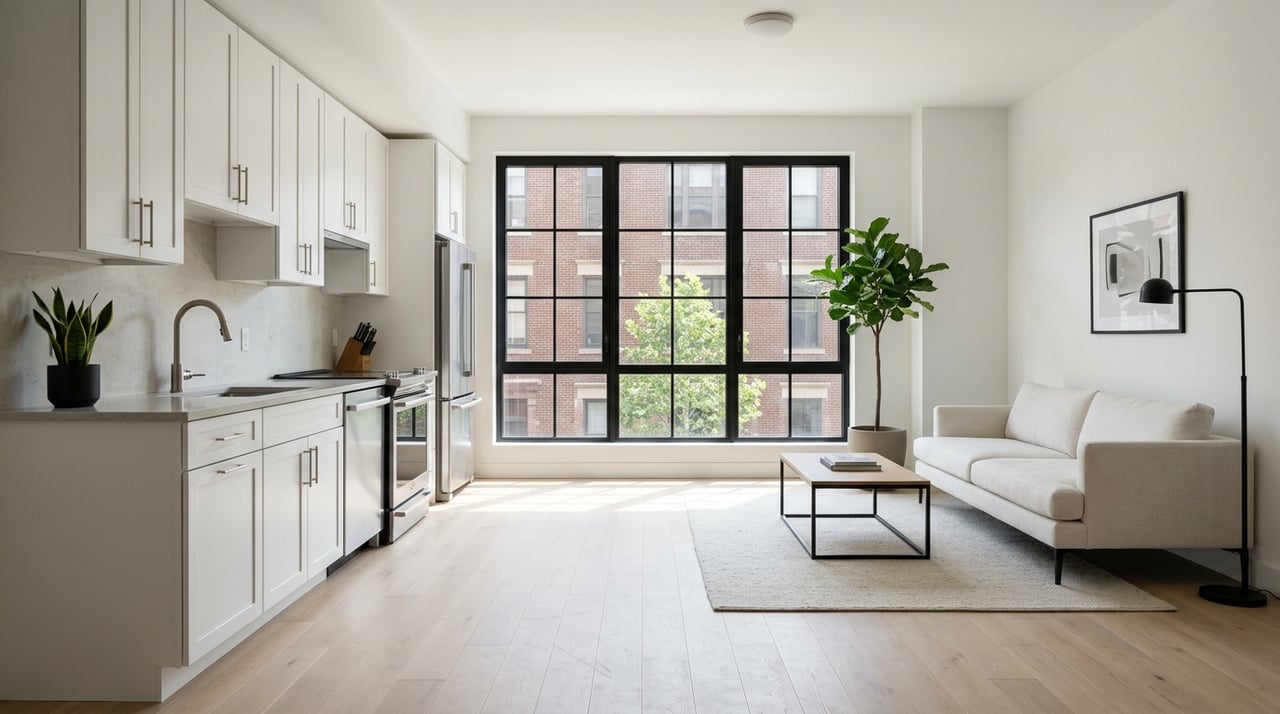
That gives buyers real choice. You can look for a classic Brooklyn rowhouse setting, a converted loft feel, or a newer full-service building experience depending on your priorities.
Greenpoint feels different from Williamsburg
People often compare Greenpoint and Williamsburg, and that makes sense because the two areas are closely connected. But the everyday feel is not exactly the same.
Greenpoint generally reads as more residential, more corridor-based, and in many places lower-rise. Williamsburg tends to function as a larger nightlife and transit magnet, while Greenpoint often feels more tied to neighborhood routines, local parks, and established commercial stretches.
That difference will matter depending on what you want from your next move. If you like North Brooklyn but want a setting that can feel a bit more grounded and day-to-day, Greenpoint may be the better fit.
Market context helps set expectations
Some market data is published for the broader Greenpoint/Williamsburg district rather than Greenpoint alone, so it is best used as context. According to the NYU Furman Center, the district had 92,627 housing units in 2024, a median household income of $110,480, a median rent of $2,610, and a 2.1% rental vacancy rate.
The same source reports that the district added 27,675 housing units from 2010 to 2025, mostly market-rate. It also shows that from 2020 to 2024, studios and one-bedrooms were commonly in the $3,000 to $4,000 rent band, while two- and three-bedrooms were often above $4,000.
Greenpoint’s neighborhood health report also found that 41.0% of households were rent-burdened and 5.3% experienced crowding, both lower than most NYC neighborhoods. Taken together, these figures suggest a neighborhood with strong demand, ongoing housing growth, and a wide spread in living options depending on product type and location.
What everyday life in Greenpoint really offers
If you are looking for a Brooklyn neighborhood with strong routines, real waterfront access, layered housing stock, and a food scene that still feels tied to place, Greenpoint deserves a close look. It offers a mix of historic texture and modern growth that is hard to replicate elsewhere in North Brooklyn.
For some buyers, the appeal will be the parks and lower-key rhythm. For others, it will be the chance to choose between classic rowhouse blocks, loft-style homes, and newer waterfront residences.
The key is knowing how each part of Greenpoint lives on a daily basis. If you want help understanding which streets, building types, or home styles align with your goals, Raquel Lomonico can help you navigate Greenpoint with local insight and a clear strategy.
FAQs
What is everyday life like in Greenpoint, Brooklyn?
- Greenpoint typically feels neighborhood-scaled, with daily life centered around commercial corridors like Manhattan Avenue, regular park use, waterfront access, and a mix of longtime local businesses and newer restaurants.
What parks do Greenpoint residents use most?
- Commonly used parks include WNYC Transmitter Park, the Newtown Creek Nature Walk, McGolrick Park, and McCarren Park, which together offer lawns, play areas, sports facilities, and waterfront walking space.
What public transit serves Greenpoint?
- Greenpoint is primarily served by the G train at Greenpoint Avenue and Nassau Avenue, with added access from buses including the B24, B43, and B48, plus the NYC Ferry East River route.
What kinds of homes are found in Greenpoint?
- Greenpoint includes 19th-century rowhouses, low-rise walkups, converted loft-style buildings, newer condos and rentals, and waterfront developments with more amenities.
How is Greenpoint different from Williamsburg?
- Greenpoint generally feels more residential, lower-rise, and corridor-based, while Williamsburg is often seen as a larger nightlife and transit hub.
Is Greenpoint a good fit for buyers who want outdoor access?
- Greenpoint stands out for everyday outdoor access because of its waterfront parks, neighborhood parks, and added public open space tied to newer waterfront development.